Vent Blog
Learn, stay informed & chill

Learn, stay informed & chill
Learn, stay informed & chill
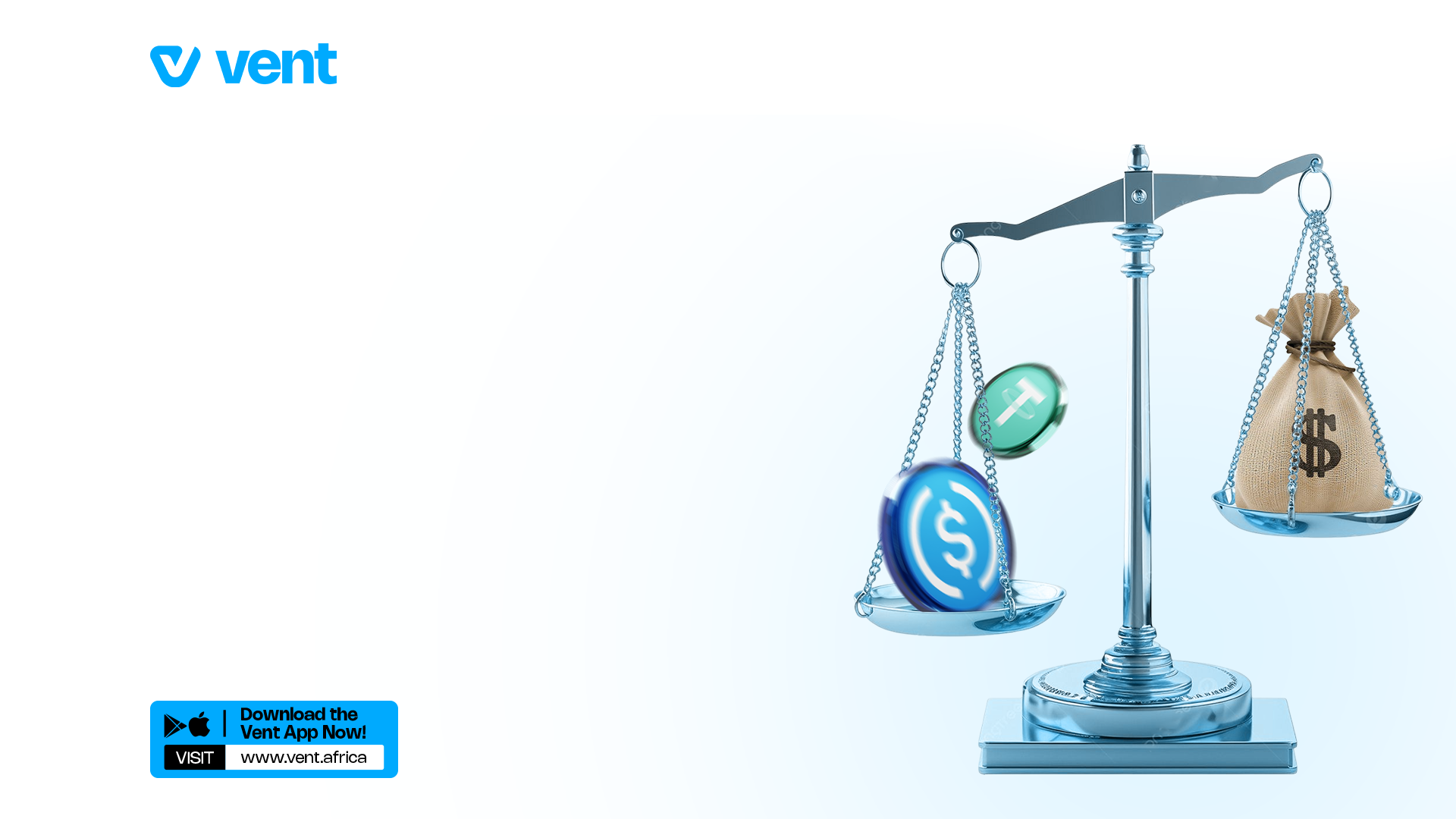
Price fluctuations are part of crypto’s DNA, but stablecoins decided to be the rebels that break the family tradition. While Bitcoin and other cryptocurrencies bounce up and down like Lagos danfos on the third mainland bridge, stablecoins keep their cool.
If you’ve ever noticed that coins like USDT, USDC, or TUSD hardly ever change in value, it’s not magic; it’s math, mechanisms, and reserves at work.
This guide will explain stablecoins, how they work, the different types, and why they matter (especially if you’re sending or storing money digitally in Nigeria).
A stablecoin is a cryptocurrency designed to maintain a steady value. It is typically pegged to a real-world asset like the U.S. Dollar, the Euro, gold, or even other cryptocurrencies.
This makes them a digital asset with a predictable price, making them ideal for payments, savings, and trading.
Why is that important? Traditional crypto like Bitcoin (BTC) Solana (SOL) or Binance Coin (BNB) can swing wildly. One minute, your 100k is 100K; the next, it’s below 90K. Stablecoins help solve this problem by reducing volatility, making them a go-to option for storing value and sending money.
There are four major categories of stablecoins, each using a different method to stay “stable.”
These are the most widely used and straightforward. Each coin is backed by fiat money (like dollars or euros) held in reserve by a custodian or bank.
Example:
These coins run on major blockchain networks using popular token standards like:
In fact, Vent lets you convert BEP-20 USDC as well as TRC-20 and BEP-20 USDT to Naira.
These are pegged to real-world items like gold, oil, or real estate. The idea is that people can own tokenised versions of physical wealth.
Example: PAXG and Tether Gold (XAUt): Pegged to the price of physical gold.
It’s like owning gold in your digital wallet without the heavy lifting.
Other cryptocurrencies back these. But since crypto can be volatile, these coins are often overcollateralized (they hold more value in reserve than they issue in stablecoins).
Example:
They’re more decentralised but also more complex.
These don’t rely on reserves at all. Instead, they use smart contracts and algorithms to control the supply by expanding or reducing it to stabilise the price.
Think of it like the Central Bank printing or burning money to manage inflation. Only this is code, not policy.
Example: Ampleforth (AMPL): One of the early algorithmic models.
These are still experimental and more volatile than the others.
Stablecoins are game-changers if you’re a freelancer, trader, business owner, or someone sending money across borders.
Here’s why:
They’re also perfect for:
Let’s say you receive 1 USDT (TRC-20). Here’s what makes it stable:
Vent, for instance, supports TRC-20 and BEP-20 so that users can enjoy fast transactions with zero stress.
Stablecoins have carved out a crucial space in crypto. You reach for them to avoid volatility, transfer value quickly, or stay on the safer side of digital money.
If you use crypto in Nigeria, you’ll likely use stablecoins more than anything else, especially for transactions, savings, and payments.
Whenever you’re ready to swap those coins for Naira, exchange your USDT for Naira on Vent.
Vent Africa makes it ridiculously easy to swap USDT (TRC-20 or BEP-20) and USDC to cash: there are no delays or hidden fees, just fast service.
✅Fast delivery
✅Trusted platform
✅No extra charges
Ready to cash out like a boss?
👉Sign up now, download Vent on the Play Store or App Store.